
GHK-Cu Peptide Injection: Uses, Research, Benefits, Safety & What to Know
Meta Title: GHK-Cu Peptide Injection: Benefits, Research & Safety Guide
Meta Description: Learn about GHK-Cu peptide injection, its potential benefits, scientific research, safety considerations, FDA status, and how injectable GHK-Cu differs from topical copper peptides.
GHK-Cu Peptide Injection: An Evidence-Based Guide
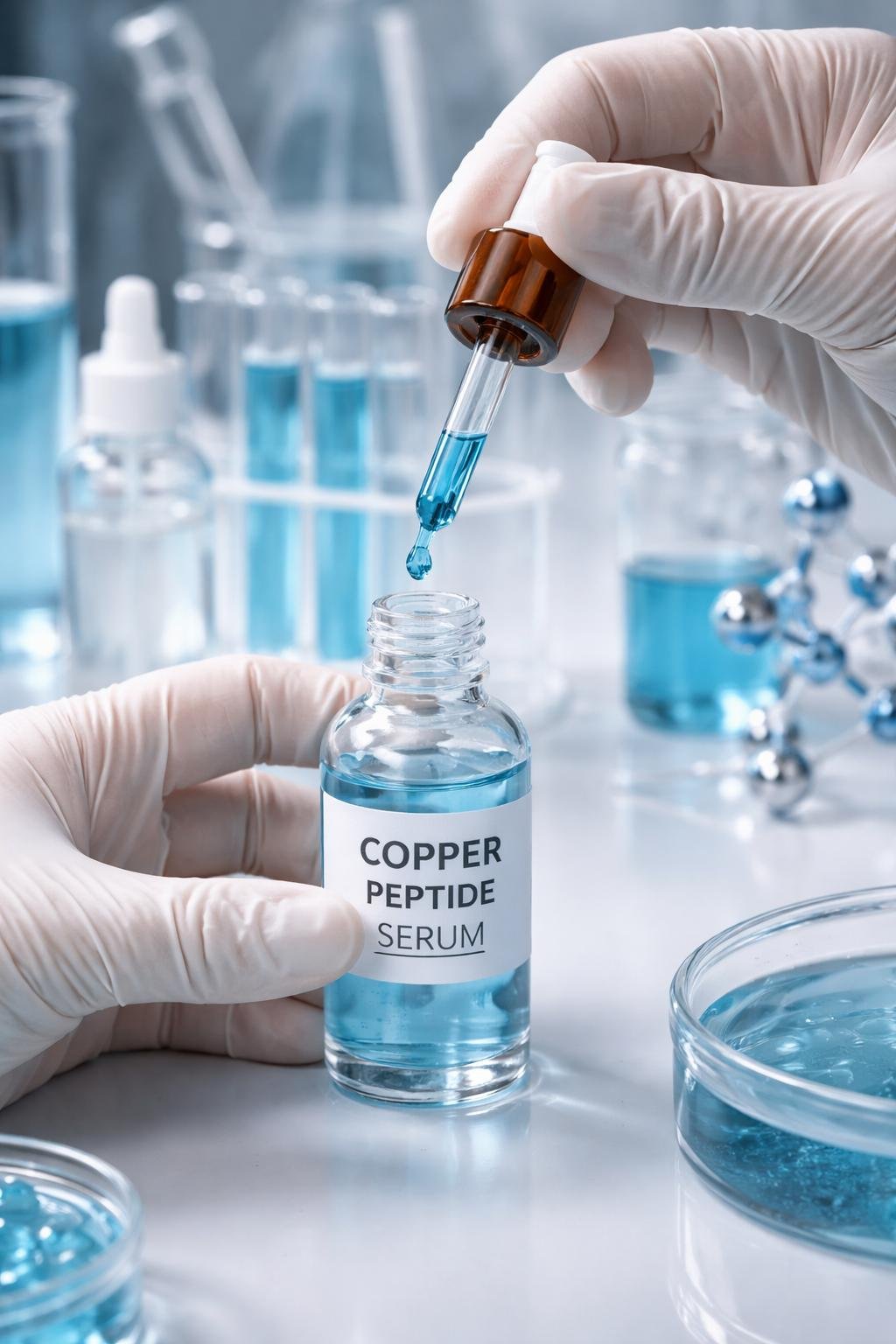
GHK-Cu peptide injection has attracted increasing attention within peptide research because of the biological activity associated with copper-binding peptide GHK-Cu. Also known as copper tripeptide-1, GHK-Cu is a naturally occurring peptide complex consisting of glycyl-L-histidyl-L-lysine bound to copper. Research has investigated its relationship with tissue remodeling, skin biology, wound-healing pathways, inflammation, and cellular signaling.
However, an important distinction needs to be made between GHK-Cu research in general and injectable GHK-Cu specifically. Much of the published human research involving GHK-Cu has examined topical preparations rather than injections. Current evidence does not establish a standardized injectable dose, long-term safety profile, or proven clinical benefits for GHK-Cu injections in humans.


What Is GHK-Cu?
GHK-Cu is a small copper-binding tripeptide naturally found in the human body. Scientists have studied GHK-Cu for decades because of its potential role in cellular signaling and tissue remodeling.
Laboratory and preclinical research has explored several areas, including:
- Skin and connective-tissue biology
- Collagen and extracellular-matrix processes
- Wound-healing mechanisms
- Antioxidant and anti-inflammatory signaling
- Cellular repair pathways
- Hair and follicle-related research
These findings help explain why GHK-Cu has become popular in cosmetic and peptide research. Nevertheless, laboratory findings should not automatically be interpreted as proof that injectable GHK-Cu produces the same effects in humans.


GHK-Cu Peptide Injection vs. Topical GHK-Cu
One of the most important considerations when researching GHK-Cu peptide injection is the route of administration.
Topical GHK-Cu has been investigated in human studies involving skin applications, whereas injectable GHK-Cu has considerably less human evidence. Results from a cream, serum, or other topical preparation cannot simply be transferred to an injection because absorption, distribution, metabolism, and safety considerations can differ substantially.
For this reason, claims that injectable GHK-Cu is clinically proven for anti-aging, muscle recovery, hair growth, or other medical purposes should be treated cautiously.
What Are the Potential Benefits of GHK-Cu?
Research into GHK-Cu has generated interest in several potential biological applications. Preclinical studies suggest that the peptide may influence pathways involved in tissue remodeling and cellular responses.


Is GHK-Cu Peptide Injection FDA Approved?
No FDA-approved GHK-Cu injectable drug is currently established.
The FDA has specifically identified GHK-Cu for injectable routes of administration as presenting safety considerations related to potential immunogenicity, aggregation, peptide-related impurities, and limited human safety information.
The regulatory situation is also evolving. FDA’s April 2026 documentation states that the nomination concerning injectable GHK-Cu was withdrawn, while the agency intends to consult its Pharmacy Compounding Advisory Committee regarding GHK-Cu before the end of February 2027.
Therefore, consumers should not interpret the removal of a nomination or ongoing regulatory review as FDA approval or confirmation of safety.
GHK-Cu Injection Safety
Safety is particularly important when discussing injectable peptides. Unlike a topical cosmetic product, an injection introduces the substance directly into the body and therefore creates additional concerns involving sterility, contamination, immune reactions, impurities, dosage, and administration technique.
Because published human data for injectable GHK-Cu are limited, there is currently no well-established evidence-based injection protocol that can be recommended generally.
Anyone considering an injectable peptide should discuss the risks, alternatives, and regulatory status with a qualified healthcare professional rather than relying on information from online peptide vendors.
Frequently Asked Questions
What is GHK-Cu peptide injection?
GHK-Cu peptide injection refers to an injectable preparation containing the copper-binding peptide GHK-Cu. It is different from topical GHK-Cu products used in cosmetic formulations.
What is GHK-Cu used for?
Research has investigated GHK-Cu in connection with skin biology, tissue remodeling, wound-healing pathways, inflammation, and cellular signaling. Much of the human evidence is based on topical rather than injectable preparations.
Is injectable GHK-Cu FDA approved?
There is currently no FDA-approved injectable GHK-Cu drug product. FDA has also identified limited human safety information and potential immunogenicity concerns associated with injectable GHK-Cu.
Is GHK-Cu the same as copper peptide?
GHK-Cu is commonly called a copper peptide or copper tripeptide. The name refers to the GHK peptide complexed with copper.
Does topical GHK-Cu research prove that injections work?
No. Evidence from topical products cannot automatically establish the effectiveness or safety of an injectable formulation.
Conclusion
GHK-Cu peptide injection remains an area of significant interest in peptide research, particularly because GHK-Cu has been investigated for its role in tissue remodeling, skin biology, and cellular signaling. However, consumers should distinguish established research from marketing claims. Current evidence for injectable GHK-Cu in humans is limited, and the FDA continues to evaluate its regulatory and safety considerations.
Reviews
There are no reviews yet.